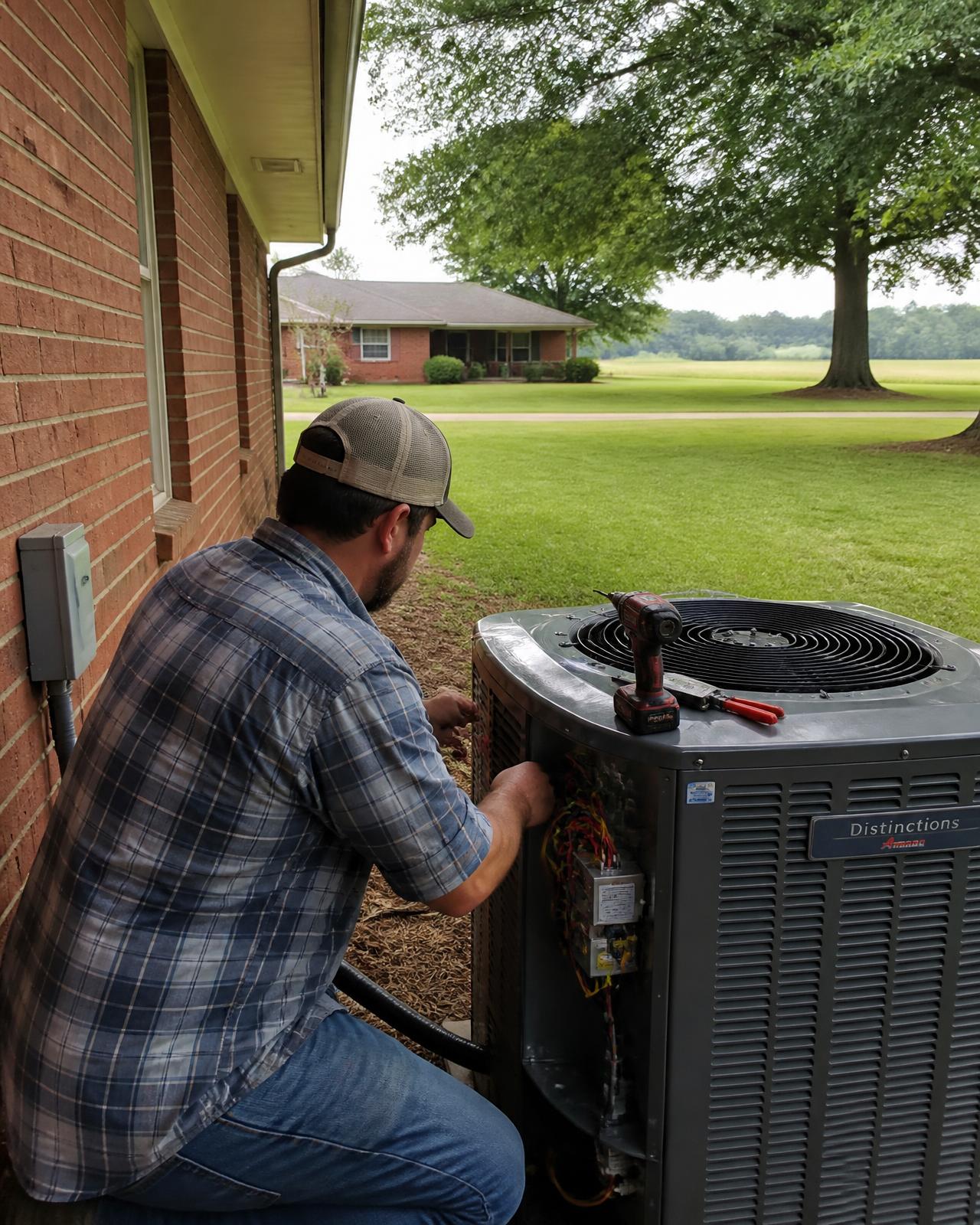
- AC blowing warm air
- Typically a loss of refrigerant charge, a failed outdoor fan motor or capacitor, a tripped breaker on the condenser circuit, or a system that has iced over and lost the ability to transfer heat.
- AC will not turn on
- Usually control power. A tripped float switch on a full condensate pan, a blown low voltage fuse, a failed contactor, or a thermostat that has lost power will all present as a completely dead system.
- Weak airflow from the vents
- Most often a loaded filter, a dirty evaporator coil, a failing blower motor or its capacitor, or duct problems such as a crushed flex run or disconnected boot in the attic.
- AC runs constantly and never satisfies
- On the hottest afternoons some run time is normal. Continuous running with rising indoor temperature points to low capacity: dirty coils, low charge, a failing compressor, or a system undersized for the load.
- Short cycling
- Starting and stopping every few minutes indicates a control or safety issue, an oversized system, restricted airflow, or an electrical fault tripping a safety limit.
- Ice on the coil or refrigerant lines
- Freezing is a symptom, not the cause. It follows either restricted airflow or low refrigerant charge. Running the system frozen risks compressor damage, so shut it off and switch the fan to on to thaw.
- Unusual noise
- A hard hum with no start suggests a capacitor or a seized motor. Grinding suggests bearings. Screeching suggests a belt or motor. Repeated clicking suggests a control relay attempting to start a failed component.
- Water around the indoor unit
- In humid weather a central system removes gallons of condensate a day. Water in the closet or a stain on the ceiling means the primary drain is clogged or improperly pitched.